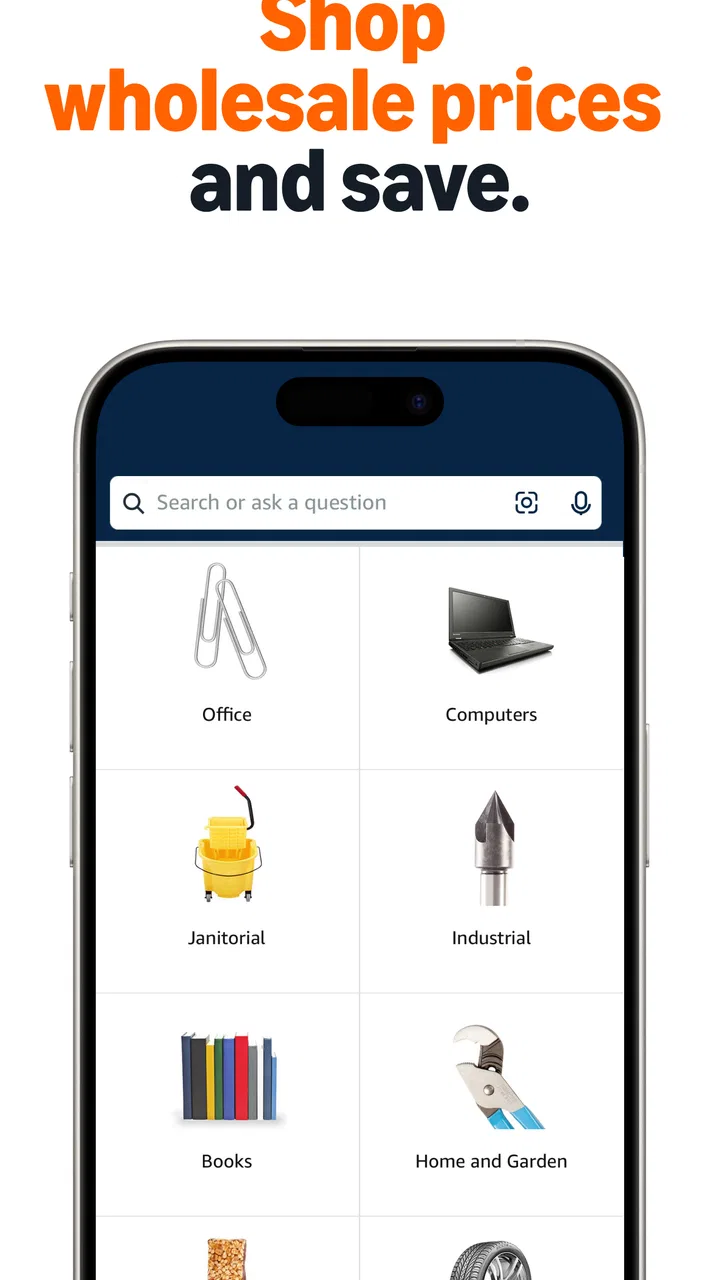
Amazon Business: B2B Shopping
- 4.0
- Rating
- 5.00M
- Installs
- Free
- Price

 Analysis by App-foxy
I found Amazon Business: B2B Shopping most useful when buying is part of a job rather than a casual shopping habit. It is a free shopping app from Amazon Mobile LLC, built around wholesale-style purchasing and business supplies. In my experience, its value depends less on browsing for fun and more on whether you already know what your workplace needs, who is allowed to order it, and how carefully you can check the final basket before submitting it.
The app has a 4.2 average from around 15 thousand ratings, with more than a thousand written reviews, and it has passed a million installs. Those figures suggest a substantial audience, but they do not remove the need to test it against your own purchasing routine. A small office, independent contractor, school department, workshop, or home-based business may benefit from it in very different ways.
Where Amazon Business usually becomes difficult
The first friction point is often not finding a product. It is making sure the product, seller, quantity, delivery choice, and account context all match the actual business need. A search for printer paper, cleaning materials, cables, packaging, or tools can produce several similar-looking options. The cheapest-looking result is not automatically the best purchase once pack size, delivery timing, seller information, and returns are considered.
You May Also Like

 Blood Strike: 2.5 Anniversary
Blood Strike’s Loadouts Turn Every Drop Into a Tactical Gamble
A close look at Blood Strike’s custom loadouts: how fast access to signature weapons reshapes its battle royale rhythm, rewards preparation, and narrows the gap between fights.

 Pandora - Music & Podcasts
Pandora’s Music Is Easy to Start, but Harder to Recover
Pandora’s strength is its low-effort path from a seed to a station. Its weak spot is how much confidence it asks you to place in connection, setup, and quiet recovery.

 8 Ball Pool
 Is Built on Rivalries, Rematches, and Routine
A close look at the rivalries, rematches, shared routines, and unanswered safety questions that turn a quick pool match into a persistent mobile community.

 Samsung Music
’s Quiet Strength Is Playing What You Already Own
Its reach comes less from spectacle than from dependable access to a personal library. That simplicity is both the app’s strongest retention engine and its ceiling.

 AccuWeather: Weather Radar
AccuWeather Review: A Quick, Clear Forecast for Everyday Decisions
For everyday plans, the best forecast is the one you can understand quickly. AccuWeather makes rain timing, radar, and local conditions easy to act on, with a few trade-offs.

 Hill Climb Racing
Why Hill Climb Racing Still Turns Crashes Into One More Run
A tiny car, a bumpy hill and one more upgrade: Hill Climb Racing keeps resurfacing because its simple chaos makes every near-miss feel personal.
More From Our News Desk
View All News


I recommend treating the product page as a checking screen, not merely a place to tap “buy.” I look closely at the exact quantity, dimensions, compatibility details, and delivery estimate before adding anything. This matters especially with supplies sold in multipacks. A box that appears inexpensive may contain less than the quantity your team normally uses, while a larger pack can create storage problems even when its unit cost looks attractive.
Another common sticking point is account context. A business purchasing app is more useful when the order is connected to the correct workplace account and purchasing arrangement. If the wrong account is open, a user may see an unexpected basket, an unsuitable delivery address, or an ordering path that does not fit the organization’s process. When something looks strange, I check the signed-in account and delivery details before assuming the app itself is broken.
Search results can also encourage rushed decisions. Amazon Business: B2B Shopping is designed for a broad catalog, so a search term may return alternatives that differ in brand, size, condition, or fulfillment. I narrow the choice by writing down the requirement first: the needed specification, acceptable quantity, latest arrival time, and maximum budget. That simple step makes the app feel much less noisy.
The most important habit is to verify the basket as a business document, not just as a shopping cart. Before ordering, I review every line, quantity, destination, and delivery expectation. That is particularly helpful when several colleagues add items or when a recurring supply order contains similar products.
Why a normal retail app may feel easier
For a single personal purchase, a standard consumer shopping app can feel quicker. Its interface and recommendations may be aimed at individual buyers, while Amazon Business: B2B Shopping makes more sense when the purchase has an operational purpose. The trade-off is that business buying requires more attention to repeatability and accountability than buying one household item.
I would not choose this app simply because a product is available there. If you only need occasional personal shopping, the business-oriented context may add steps without giving you a meaningful advantage. It is better suited to people who regularly purchase supplies, compare pack sizes, or need a clearer separation between work orders and personal shopping.
Setup checks that prevent avoidable problems
The app runs on Android 9 or later, so compatibility is one of the first practical checks. If installation or updating is difficult, I start by confirming the device’s operating system, available storage, and connection rather than repeatedly retrying the same action. The current version is 32.5.0.451, and keeping the installed version current is sensible when an issue appears during sign-in, browsing, or checkout.
After installation, I take a moment to confirm that I am using the intended business identity. I check the account name, delivery location, and any visible purchasing details before searching for products. This is a small investment, but it prevents a frustrating situation in which an order seems to disappear simply because it was created under another account or directed to another address.
I also prepare the information I will need before opening the app. For a routine order, that might include a list of product specifications, the required quantities, the person responsible for approval, and the date by which supplies must arrive. This preparation is more valuable than relying on recommendations because it keeps the search focused on the actual work requirement.
Notifications and account messages deserve a quick review as well. If an order update or sign-in prompt does not appear, I check the app’s account area and the device’s general notification settings. I do not assume that a missing alert means the order failed. I first look for the order status inside the account, then confirm whether the device is allowing the app to display notifications.
One useful setup technique is to begin with a low-risk order rather than moving an entire purchasing routine into the app immediately. I would choose a familiar supply with an unambiguous specification, complete the process, and observe how the account, address, delivery information, and order history behave. Once that path feels reliable, I would use it for larger or more time-sensitive purchases.
How I organize a repeat supply run
For recurring purchases, I keep a simple external list of the exact items the business normally uses. I include the preferred size, acceptable substitute, usual quantity, and the person who should approve the order. Then I use the app to locate and compare the products instead of trying to remember every detail while browsing.
This approach reveals a subtle trade-off. Reordering something familiar is efficient, but it can also preserve an outdated choice. Packaging may change, a different seller may appear, or a product may no longer fit the team’s current usage. I therefore compare the product details again rather than assuming that a previous item is still the right one.
For a small business, the app can serve as a practical purchasing workspace when one person handles most orders. For a larger team, the real challenge may be internal coordination rather than navigation. I would agree on naming conventions for supplies and ask colleagues to describe what they need precisely. “Printer supplies” is too vague; a model number, size, or compatibility requirement is much safer.
Recovering a workflow when something goes wrong
When a page loads slowly or a search does not respond, I use a basic sequence: check the connection, close and reopen the app, and try the same action again after confirming that the device is not switching between unstable networks. I avoid tapping the purchase control repeatedly because duplicate actions are harder to diagnose than a paused screen.
If the app opens but the account appears incomplete, I check whether I am signed in to the intended account and whether the delivery information is correct. I then revisit the basket. A missing item may have been removed because of a change in availability, a quantity adjustment, or a session problem. Repeating the search from the product page is usually clearer than relying on an old basket that no longer reflects the current selection.
For checkout trouble, I separate the process into stages. First I confirm that the products are still in the basket. Next I review the address and delivery choice. Finally I check the order summary before trying again. This makes it easier to identify whether the problem is with the product selection, the account, the destination, or the final submission step.
When an order status seems uncertain, I do not immediately place a second order. I look at the account’s order area and check for a confirmation message or updated status. If the first attempt did go through, submitting again could create an unnecessary duplicate. This is one of the most important recovery habits for business purchasing, where duplicate supplies can tie up money and storage space.
Another practical technique is to capture the details of a failed attempt for your own records: the product name, quantity, approximate time, and the screen where the problem occurred. I would not record sensitive account information in an unsecured note, but a concise description helps when asking a colleague or support channel for assistance. It also makes it easier to resume the purchase without guessing.
When restarting is better than forcing the same path
Sometimes the cleanest recovery is to leave the stalled basket, search for the item again, and rebuild only the affected part of the order. This is especially useful when a basket contains several similar products and one line has changed. Starting over can feel slower, yet it reduces the chance of carrying an obsolete quantity or a mistaken variation into checkout.
I would also avoid troubleshooting several variables at once. If I change the network, switch accounts, edit the address, and replace the product in one attempt, I cannot tell what solved the problem. I prefer one change at a time, followed by a quick check of the basket and account state.
When the app is not the cause
Business orders often involve conditions outside the app. A product can be unavailable, a delivery estimate can change, a workplace address can have receiving restrictions, or an internal approval step can delay the purchase. In those situations, repeatedly reinstalling the app will not solve the underlying issue.
The same applies to product suitability. If a cable does not fit a device, or a container is too small for the intended task, that is a selection problem rather than an app failure. I compare the technical description with the equipment or process that will use the item. For business supplies, this check is more important than a quick visual match in the search results.
Delivery problems also need a wider view. I confirm the destination, the expected arrival information, and whether someone will be available to receive the package. If a workplace has limited receiving hours, an apparently late order may actually reflect a mismatch between delivery timing and the site’s operating routine.
There is also an organizational cause that individual users often overlook: unclear purchasing responsibility. If several people can add items but nobody owns the final review, the app may appear confusing because the workflow itself is undefined. A simple internal rule—one person checks quantities, destination, and timing before submission—can prevent more errors than changing devices or reinstalling software.
Privacy and suitability matter too. The content rating is Teen, but that does not mean every purchasing situation is appropriate for every user. A workplace should still decide who may place orders and what account information can be accessed on shared devices. I would use a personal device carefully, avoid leaving an account open for the next person, and follow the organization’s own security practices.
Who should use it, and who should skip it
I see a strong fit for independent professionals, small offices, workshop owners, and teams that repeatedly buy operational supplies. It is also useful for someone who wants to keep work purchasing distinct from personal shopping and who is willing to inspect the order carefully before submitting it.
I would skip it for a person who only wants occasional household purchases and does not need a business-focused buying routine. I would also be cautious if your organization requires a specialized procurement system, formal approval chains, or supplier arrangements that are not represented in your normal shopping process. In that case, the better option may be the company’s established purchasing tool, even if this app is convenient for smaller orders.
The app is not a substitute for inventory management. It can help you find and order supplies, but it will not remove the need to know what is already in storage, what is being consumed, and what must arrive first. I get the best results when I use it as one step in a simple process: check stock, define the requirement, compare the item, review the basket, and record the order.
My practical verdict after using it
Amazon Business: B2B Shopping is a useful free option when your shopping has a clear business purpose. Its strongest quality is not that it makes every purchase effortless; it is that it gives business buyers a focused place to handle supplies and repeat orders. That benefit becomes more noticeable when you separate work purchases from personal browsing and approach each order with a specification and quantity in mind.
My main reservation is the amount of attention required. A broad catalog can make similar products look interchangeable, and account or delivery mistakes can create more trouble for a business than for an individual shopper. I would not rush through checkout, especially when ordering multipacks, equipment accessories, or time-sensitive supplies.
In an everyday scenario, imagine a small design studio running low on shipping materials before a busy week. I would check the remaining stock, search for the exact box size and quantity, compare the available options, confirm the studio’s delivery address, and review the complete basket before ordering. If the order stalled, I would check its status before trying again. That workflow is simple, but it uses the app where it is strongest and avoids treating it like a casual impulse-shopping tool.
The app was released on May 11, 2021, and its current version is 32.5.0.451. Those details are useful when checking whether a device can run it or when describing a problem to someone helping with setup. More important than the version number, though, is whether the app fits your purchasing responsibilities and whether your team has agreed on a reliable review step.
Overall, I recommend it to business buyers who value convenience but are prepared to verify details. I would recommend a normal consumer shopping alternative for personal, infrequent purchases, and a dedicated procurement platform for organizations with complex approval or inventory requirements. For everyone in between, this app can be a practical middle ground—provided you treat the basket as the beginning of an accountable business order, not the end of the decision.
FAQs for Amazon Business: B2B Shopping
01What is Amazon Business and how does it differ from regular Amazon?
Amazon Business is a tailored platform for business users, providing access to business-only pricing, bulk discounts, and VAT invoicing. Unlike regular Amazon, it offers features specifically designed for businesses, such as multi-user accounts, approval workflows, and analytics tools. This makes it ideal for companies looking to streamline their procurement processes.
02How do I set up an Amazon Business account?
To set up an Amazon Business account, visit the Amazon Business website and click on ‘Create a Free Account.’ Fill in your business details, including your business name, address, and tax information. Once your account is verified, you can start adding users and setting up approval workflows to manage your purchasing needs effectively.
03Is there a cost associated with using Amazon Business?
Signing up for an Amazon Business account is free. However, businesses can opt for Amazon Business Prime, which offers additional benefits such as free shipping, enhanced spending analytics, and more. Business Prime comes with a subscription fee, which varies based on the number of users and the level of service required.
04What payment methods are accepted on Amazon Business?
Amazon Business accepts a variety of payment methods, including credit cards, debit cards, and Amazon Business Line of Credit. Additionally, businesses can set up a purchase order system to manage their expenses. The platform also allows for flexible payment terms, making it easier for businesses to manage cash flow.
05How secure is the Amazon Business platform?
Amazon Business employs advanced security measures to protect user information, including data encryption, secure access controls, and regular audits. The platform is designed to meet the compliance needs of businesses, ensuring all transactions and data are handled securely. Users can also set permissions and monitoring to manage account access effectively.
Pros
- Wide range of business products available.
- Exclusive business-only pricing and discounts.
- Easy integration with procurement systems.
- Simple multi-user account management.
- Free shipping on eligible orders.
Cons
- Limited product categories compared to main site.
- Some features require a paid plan.
- Occasional delivery delays reported.
- Complex returns process for bulk orders.
- Mobile app lacks some desktop features.

Amazon Business: B2B Shopping
Gallery